Fighting for the Sake of Fighting, 1944 – The Defeat
(Five photos from 1944, as well as 25 undated photos, conclude the collection of photos by Lothar Gruber.)
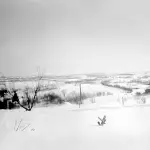
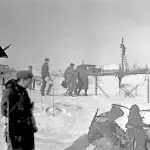
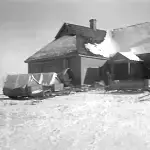
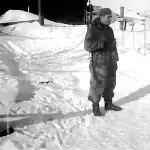
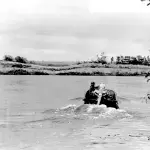
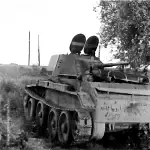
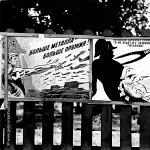
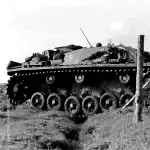
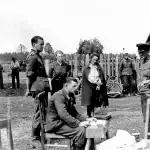
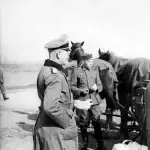
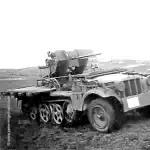
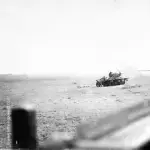
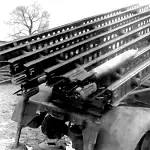
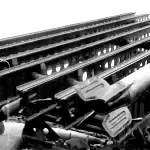
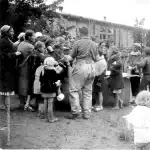
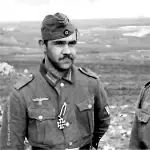
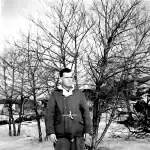
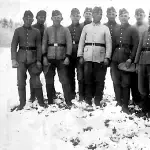
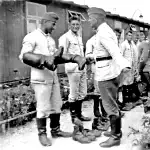
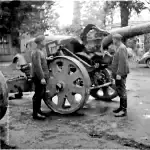
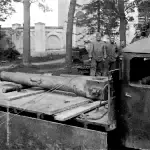
By early 1944, the war was definitively lost—and everyone knew it. While a few true believers remained, the facts spoke for themselves; these individuals were simply in denial of reality. 1943 had been the year of Stalingrad, but the *Afrika Korps* had also surrendered—marking the end of the madcap experiment to conquer the entire Middle East. To an even greater extent, however, the military disaster of "Operation Citadel" served as a grim omen, even though the numerical losses were not as high as those at Stalingrad. Better known as the "Battle of Kursk," this operation was the largest battle in world history and was followed by the Soviet offensive at Kharkov. The losses of German tanks and soldiers—specifically from the most potent German units—were devastating. With this debacle, the glory of the German Panzer divisions was gone for good. Meanwhile, the Western Allies had landed in Italy, although the threat posed by those troops was relatively minor. Italy’s mountainous terrain allowed for defense with limited forces, yet those frontline divisions were sorely missed in the East. Everyone was simply waiting for the major Allied landing in France, scheduled for 1944. Yet an even greater catastrophe was to unfold on the Eastern Front: the virtual annihilation of Army Group Centre during Operation Bagration—occurring simultaneously with the Allied landings in France. After this victory, only a few reserve units and security troops stood between the Red Army and Berlin. However, accusations that the Russians should—and could—have advanced more rapidly on Warsaw and Berlin are unfounded. Soviet casualties in these battles were far higher than German losses; their troops were exhausted and decimated, and Army Groups South and North remained dangerous adversaries on their flanks. Furthermore, the Wehrmacht employed a "scorched-earth" policy, which severely hampered the supply effort. In the recaptured territories, railway lines had to be relaid, makeshift bridges erected, and roads repaired—all while simultaneously providing for the civilian population, some of whom had been deported to camps by the Germans.
Upon closer inspection, however, the question of why Wehrmacht soldiers continued to fight at all in such a hopeless situation does not really arise. Virtually all German soldiers regarded the Bolsheviks as the enemies of civilization. During the advance, the bodies of captured Wehrmacht soldiers—tortured to death in the most gruesome manner—were repeatedly discovered, and the leadership had naturally ensured that these incidents became widely known. Yet, the longer the fighting dragged on, the more this impression was qualified; most frontline soldiers came to view the Red Army troops they faced simply as soldiers doing their duty, rather than as "Bolsheviks." A far more significant factor was the awareness of crimes committed by their own side. Admittedly, the reality was far removed from the claim once made in a TV documentary by a peculiar commentator calling himself a historian—namely, that "one-third of the photos in every German soldier’s wallet consisted of massacre photos, one-third of pornography, and one-third of family snapshots." Nevertheless, word had spread quickly among the troops regarding conditions in the prisoner-of-war camps, where Russian soldiers were starving to death in droves. Many soldiers also witnessed massacres firsthand—such as motorcycle dispatch riders, supply unit personnel, or men traveling on leave from the front. When they were not fighting or fortifying their positions, the soldiers’ main pastime was conversation—often with those who moved around a bit, such as couriers; a soldier might even treat such a visitor to a secretly hoarded bottle of beer. Even strict penalties for spreading "latrine rumors" could not stop this exchange of information. In short, the frontline soldiers had their ears to the ground, and practically every soldier on the Eastern Front was aware—at least through hearsay—of German crimes. Moreover, during the retreats, all soldiers witnessed the destruction wrought by the "scorched earth" tactics—and often participated in it themselves. The imperative was to protect the homeland from the victors’ vengeance—at least for as long as possible, but at any cost! Like hundreds of thousands of other Wehrmacht soldiers, Non-Commissioned Officer Gruber paid this ultimate price during the war’s final full year...