Exercises and Deadly Earnestness 1941 – The Road to the Front
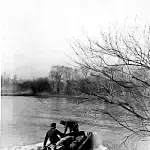
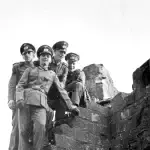
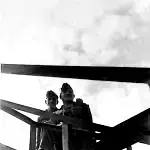
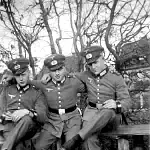
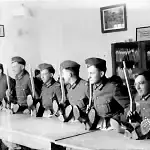
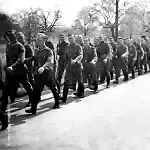
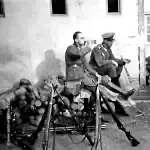
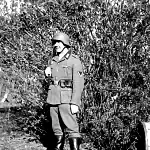
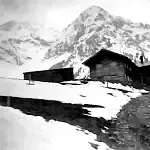
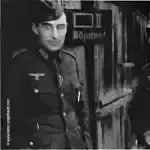
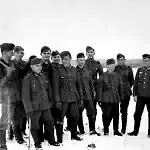
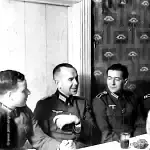
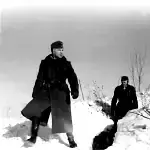
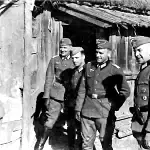
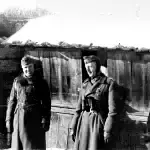
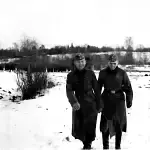
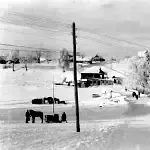
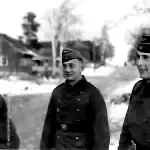
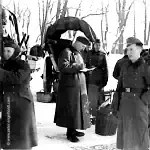
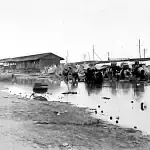
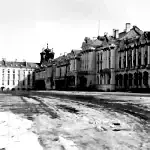
For Gruber, the year 1941 began while he was in the midst of his military training. Camaraderie was deliberately emphasized within the Wehrmacht, as the aim was for squads to form cohesive teams that would stick together through thick and thin and function like a well-oiled machine. These highly effective combat units—trained to a high standard in various combat tactics—were emulated by most belligerent nations during the war and remain the global standard today. Military training was not limited to the initial recruit phase; it continued behind the lines whenever a unit was withdrawn from the front for a rest period. Gruber frequently recounts such exercises and training courses.
Beyond the bonds of camaraderie—a continuation of the spirit found in the Hitler Youth—the technical aspects and the sense of adventure associated with military life also held great appeal. Where else in civilian life at that time could one cross rivers in assault boats or conduct exercises in high-alpine terrain? Moreover, the profession of soldiering had long enjoyed high prestige across almost all of Europe. It is therefore understandable that, while still in training in 1941, Gruber committed to a twelve-year term of service—a decision also encouraged by the higher military pay.
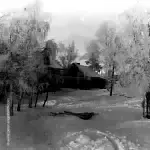
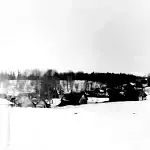
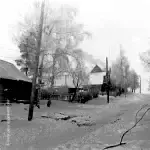
When Gruber arrived at the Eastern Front in early September, the invasion of the Soviet Union had begun just over two months earlier. The Wehrmacht had achieved brilliant victories and had already advanced to the outskirts of Leningrad. Nothing seemed to stand in the way of final victory—even though the Soviets were still putting up fierce resistance—as 1941 drew to a close. However, the winter of 1941–42 would prove to be the coldest in living memory, with temperatures dropping to minus 50 degrees Celsius; during that winter, the Wehrmacht suffered greater losses in some instances due to the cold than to enemy action. This was where the initial consequences of the German miscalculations regarding Operation Barbarossa became apparent: there was simply a severe lack of suitable winter equipment. Soldiers, for example, had to light fires beneath the engines of their tanks and vehicles to keep them operational.
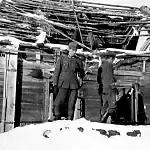
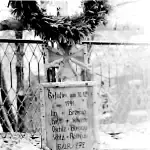
Gruber, too, now experienced the grim reality of war. Four days after his arrival at the front, his battalion commander was killed on a stretch of road Gruber had passed just hours earlier. Two days later, he experienced his first Russian attack, and eight days after that, a shell struck the house where he was sheltering. Although he remained uninjured, by this point he must have realized just how precariously a front-line soldier’s life hangs by a thread. There is a vast difference between knowing something and experiencing that knowledge firsthand...