Advance on Kholm (Холм), November 1942
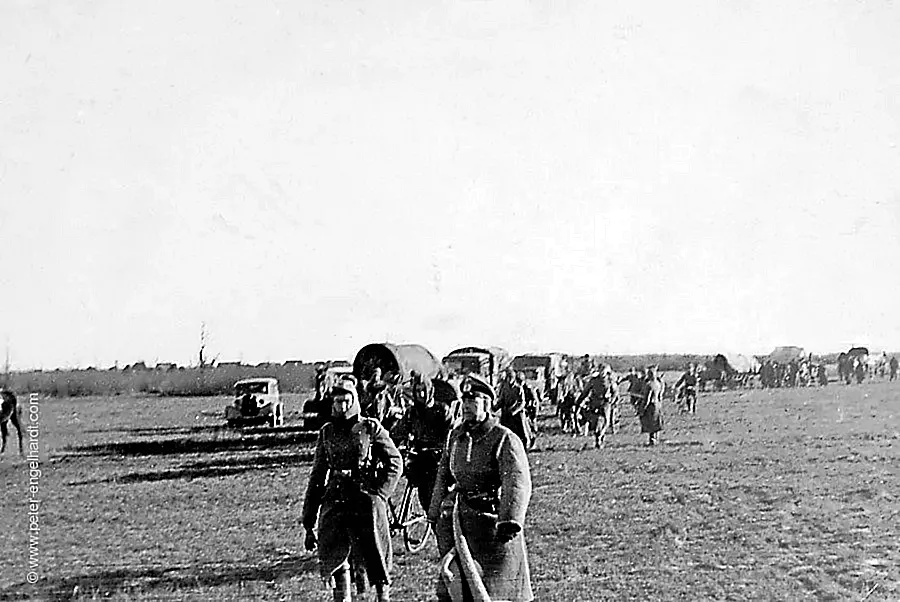
After fierce fighting along the Volkhov and in the Neva Bend—which resulted in heavy casualties—Gruber’s unit was redeployed to the Kholm area for anti-partisan operations. These irregular forces had become a genuine problem for the Wehrmacht. However, since they possessed only light to medium weaponry, further heavy losses were not anticipated. Partisans avoided open combat and usually attacked only from ambush; consequently, few German soldiers held these fighters in any regard. Parallels can certainly be drawn to the present day—for instance, to the Taliban in Afghanistan, whom Western occupation forces likewise view as terrorists rather than freedom fighters.
Historical Context of Partisan Warfare: Perceptions of partisans as irregular fighters were heavily shaped by one’s perspective. While joining partisan groups often represented the only chance of survival for those persecuted on racial or political grounds, the German Wehrmacht viewed them—particularly in the case of Red Army units that had infiltrated the area—as an illegitimate threat that violated the established laws of war. The supply situation further exacerbated the conflict: partisan units often relied on the confiscation of food to survive, which placed an extreme strain on the social foundation of the resistance and further depleted the already destitute local civilian population. The contempt that regular armies—whether the Wehrmacht, the Red Army, or later NATO forces in other asymmetric conflicts—harbored toward irregular fighters stems primarily from an aversion to ambush and sabotage tactics, which undermine the military ideal of the "open field battle."
The visually distinct text was created in July 2026 with the help of the AI Gemini. - Page translated with Google.
© Peter Engelhardt, www.peter-engelhardt.com. All rights reserved.


