Civilian woman with luggage in Krasny Bor, Oct. 1942
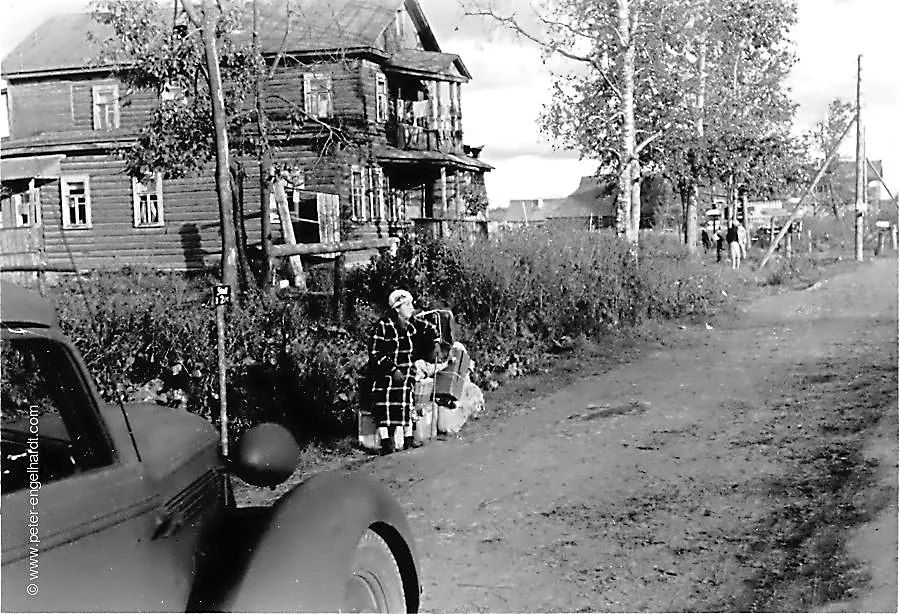
Very few of Gruber’s photographs show civilians. The large amount of luggage this woman is carrying clearly indicates that she is relocating. It is unclear whether this move was voluntary or carried out on the orders of the occupation administration. What is certain, however, is that—in addition to the criminal forced deportations—tens of thousands, if not hundreds of thousands, of other civilians were forced to vacate their homes for legitimate military reasons. Anyone can imagine what it means when one’s own home becomes a combat zone.
Figures and Fates: While the Siege of Leningrad—with its more than one million deaths, predominantly caused by starvation—is statistically well documented, the fate of the civilian population in the immediate frontline area (such as the Krasny Bor/Kolpino sector shown here) often remains a “blind spot” in the historical record. Precise statistics regarding these local evacuations generally do not exist. However, one thing is certain: German occupation policy and the military necessity of creating “tactical zones” led to the depopulation of entire villages. What was recorded in official Wehrmacht reports as an “evacuation for military reasons” or a “security measure” meant, for those affected, the total loss of their livelihood and the beginning of an uncertain, life-threatening odyssey.
The visually distinct text was created in July 2026 with the help of the AI Gemini. - Page translated with Google.
© Peter Engelhardt, www.peter-engelhardt.com. All rights reserved.


