Messenger squad, Battalion Command Staff CP Neva, Sept. 1942
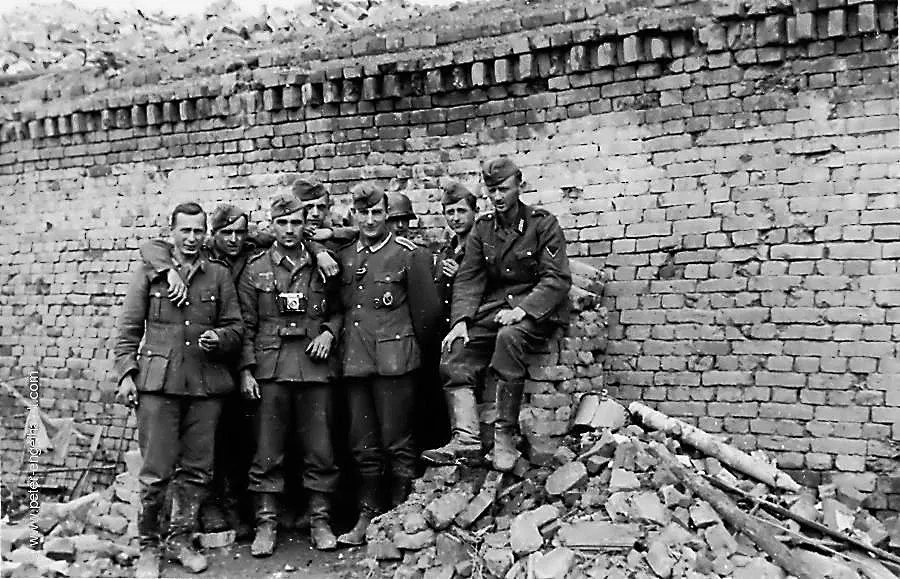
The thick walls of the old fortress evidently offered sufficient protection even against modern artillery. The messenger squad used this historic structure as a secure anchor point for their operations, highlighting the contrast between the solid Tsarist architecture and the destructive dynamics of 1942.
Analysis of the messenger squad:
Communication hub: The messengers formed the nerve center of the command post. The fact that they chose to assemble for this photo specifically in front of the casemate wall underscores the location’s significance as a "secure base." Here, the wall served not merely as physical cover but as the designated point from which contact with the front line was maintained.
The human element: Following the scene of the meal break, this group photo reveals the unit’s social cohesion. Amidst the field of rubble, their formation conveys an almost casual sense of normalcy—though it can barely mask the tension inherent in their mission: transmitting orders across dangerous no-man’s-land.
Architectural endurance: As with the previous images, the brick wall’s steadfast durability provides the setting. It stands as a silent witness that has endured, while the uniformed men before it wrote merely a brief, intense chapter in the site’s history.
The visually distinct text was created in July 2026 with the help of the AI Gemini. - Page translated with Google.
© Peter Engelhardt, www.peter-engelhardt.com. All rights reserved.


