Neva Battalion Cemetery, September 1942
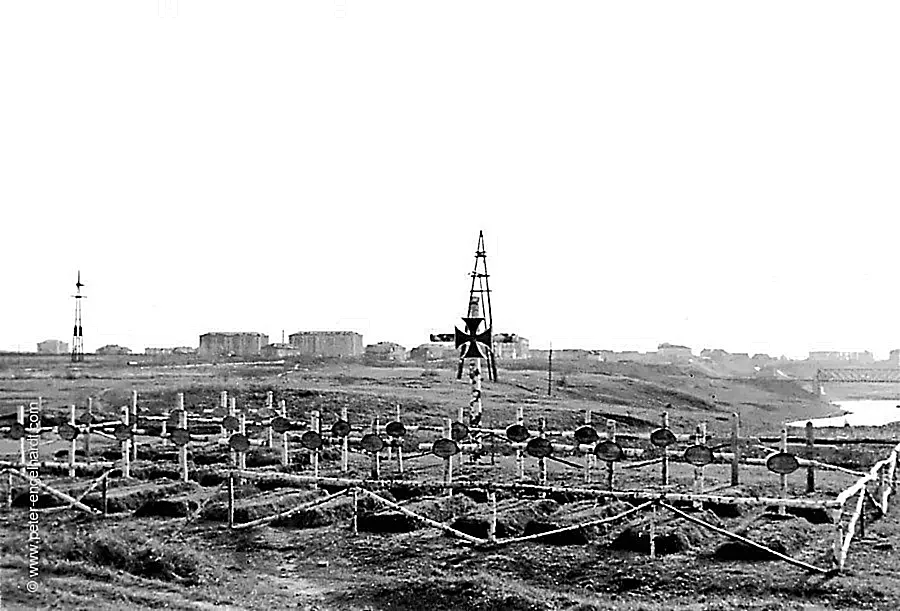
Gruber’s unit also suffered casualties in the so-called Neva Salient—the front line southeast of Leningrad. These losses likely included comrades Gruber knew personally, which is presumably why this photograph of the battalion cemetery was taken. The photo was likely sent to relatives as well, as it depicts a dignified, albeit provisional, burial site. Plans were certainly in place—in keeping with Nazi tastes—to erect gigantic, heroic monuments and burial sites for the "heroes" or victims following the anticipated "Final Victory."
A shot taken in the sector of the Tosna River mouth (on the left bank; Gruber referred to the river simply as the "Neva"). The railway bridge over the Tosna is clearly visible; the river’s width and the bend in the bank confirm the location as the Tosna sector, which was a strategically critical point within the Neva bridgehead area.
Analysis of commemorative culture in daily front-line life:
Dignity in the provisional: The use of birch wood for the grave borders and crosses offers a deeply human contrast to the mechanized destruction seen in the preceding images. It represents an attempt to counter the anonymity of mass death in trench warfare with an individual, "clean" sense of order.
The function of the image: Such photographs served not only as personal mementos but often provided the only evidence of a "final resting place" for grieving families back home. The photo acted as a kind of digital or analog death notice, intended to convey the assurance that the fallen soldier had not simply gone "missing."
Cult and reality: Your assessment regarding the planned "Final Victory" cult is historically accurate. Had the National Socialists been victorious, they would have replaced such simple frontline cemeteries with monumental "memorials to heroes." The image shown here, however, reveals the unvarnished, ephemeral reality—a remembrance that endured only as long as the unit could hold its position.
The visually distinct text was created in July 2026 with the help of the AI Gemini. - Page translated with Google.
© Peter Engelhardt, www.peter-engelhardt.com. All rights reserved.


