Scout patrol on the Eastern Front in the winter of 1943
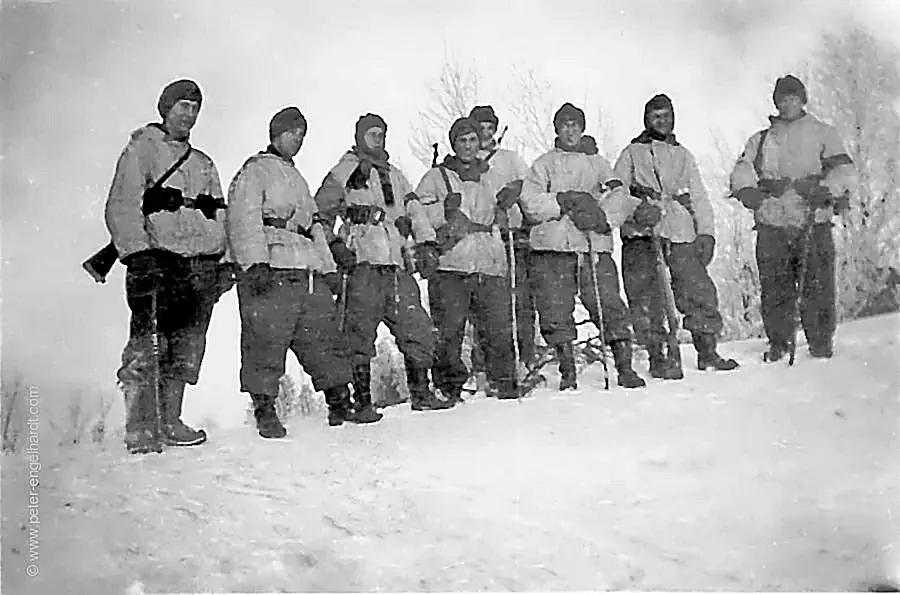
The photo is captioned with the names Schollhas and Schuhmacher. Evidently, the two men were the leaders or members of this reconnaissance patrol, which appears to be just setting out. No specific month is recorded for the photo, but its format suggests the winter of 1942–43. The few surviving photos from the following winter (1943–44) are square in format, though a definitive attribution is not possible.
Danger in No Man’s Land: On the Eastern Front—particularly amidst static trench lines that often remained unchanged for weeks or months—reconnaissance patrols were a daily method of gathering intelligence. Although not statistically tracked as a separate category, the men involved faced disproportionately high risks. Because they usually operated in small groups, casualties within a patrol—whether caused by mines, ambushes, or sudden artillery fire—often resulted in the total loss of the entire unit. Unlike the Western Front, where positions were often more widely spaced and separated by natural barriers, close-quarters combat in the "No Man’s Land" of the East was defined by an immense density of minefields and the enemy’s high level of vigilance. A reconnaissance patrol was therefore far more than a mere observation post; it was a high-risk undertaking that often required the most experienced men—a factor that further intensified the psychological strain on the troops.
The visually distinct text was created in July 2026 with the help of the AI Gemini. - Page translated with Google.
© Peter Engelhardt, www.peter-engelhardt.com. All rights reserved.


