March to the Volkhov, April 1942 – Supply Route
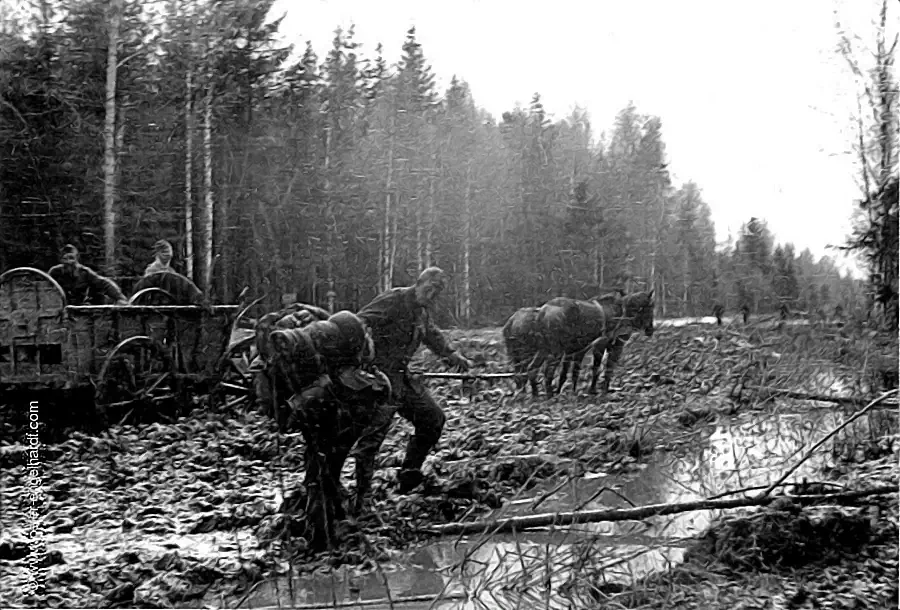
Millions of horses perished from a lack of fodder, the cold, or exhaustion during this most terrible of wars. In most cases, the animals—slaughtered out of necessity—ended up in the cooking pots of field kitchens. Many soldiers even preferred the short-fibered meat of these equines to that of old, tough cows.
The image marsch-zum-wolchow--april-42--03.webp illustrates the fate of the millions of horses that perished during the war due to a lack of fodder, the cold, or exhaustion. These animals, slaughtered out of necessity, often ended up in the cooking pots of field kitchens; indeed, many soldiers preferred the short-fibered meat of these equines to that of old, tough cows.
The picture brings home the brutal reality of the war, in which animals operated as indispensable yet suffering components of military logistics within a merciless environment.
In this context, it becomes clear that Wehrmacht supply lines in swampy regions—such as the Volkhov area—were under extreme pressure, making the consumption of horsemeat an inevitable aspect of the troops’ daily rations. Deploying horses under such conditions was not merely a logistical disaster but also a humanitarian and ethical one, as the animals were exposed to the grueling demands of the march as mere "consumables." This record of the teams’ final reserves of strength amidst the mud reflects the utter desperation and deprivation that characterized the advance in April 1942.
The visually distinct text was created in July 2026 with the help of the AI Gemini. - Page translated with Google.
© Peter Engelhardt, www.peter-engelhardt.com. All rights reserved.


